
Industrial automation for intelligent problem solving
The automation of industrial processes and greater control of production are among the most effective strategies for increasing efficiency in companies.
What are the most common production problems that good automation can solve?
Automation systems are now available to any company, regardless of size, to help solve common manufacturing problems.
Lack of productivity and flexibility in the process
- OEE rate unknown or less than 50% OEE rate unknown or less than 50% OEE rate unknown or less than 50% OEE rate unknown or less than 50%
- Anarchy in the plant
- Planning problems
- Unknown or excessive lead times
- Rigidities in process changes
- Low value-added operations
- Non-adaptation to demand (takt time)
My assets have the capacity to produce more but we are not taking advantage of it and they are underutilized.
Complex talent management
- Problems in recruiting qualified personnel
- Excessive onboarding times
- Decentralized and islanded knowledge
- Each operator approaches the tasks differently.
Lack of personnel is limiting the company's growth.
Quality problems
- High volume of defectives
- Lack of correlation of inspection with process parameters
- Slow response times, generating a lot of defective before action can be taken
- Limited traceability
- Limited real-time quality visibility
Margins are tighter and competition is greater. We cannot afford our current cost of NO quality.
Reduced visibility and lack of planning
- Limited or no view of what is going on in the workshop
- Limited access to operational information
- Non-existent integration of processes and assets with other ERP, MES, PLM, etc. solutions.
- Lack of KPIs for production evaluation
We are not able to identify bottlenecks in our processes, nor are we able to identify areas for improvement.
Disconnection of what happens in the workshop with the rest of the systems.
- No connection between real time machinery and process controls
- Difficulty in detecting irregularities in physical devices
- Difficulty in the management of parts
- Multitude of stand-alone IT solutions
- Different communication protocols
Managing a production plant is not easy. The lack of connection of our systems with what happens on the shop floor limits us a lot in terms of improvement.
It is possible to increase up to 50% the capacity of your machines with the MIC platform.
KNOW HOW TO IMPROVE PRODUCTION
A key measure: flexible and unattended processes
OEE is a key measure of the efficiency and productivity of a production system. However, on its own, it does not answer many of the questions that those of us in production ask ourselves.
How to do it?
How can we produce more units at a lower cost? Can we reduce the time it takes from the start of the production process to completion? Can we do this while maintaining quality and making better use of resources?
The answer
The answer lies in process automation. Technology is allowing us not only to optimize the production capacity of machines, but also to give them autonomy in decision-making.
Good automation improves OEE by working on equipment availability, efficiency and part quality. In addition, it can also perform work unattended.
Intelligent automation enhances process flexibility and efficiency, with a direct impact on OEE.
The MIC platform is able to plan the activity dynamically, optimizing the use of resources autonomously and without dependence on third parties.
LEARN MORE ABOUT THE BENEFITS
Unattended automation and automatic enhancement
Is there anything better than a process control system that collects data and analyzes it to improve production?
Yes, to do it automatically.
Intelligent automation acts on machine parameters and executes jobs unattended, improving productivity.
To automate intelligently is to incorporate improvements autonomously.
The MIC platform facilitates autonomous operation of processes to avoid defective generation, improve quality and optimize machine uptime. For example, the system corrects operating parameters based on inspection data.
LEARN MORE ABOUT THE BENEFITS
Data management must be understandable and in real time to be useful
It seems basic: access to data must be intuitive, ergonomic (we are in a workshop!) and straightforward. And yet, there are solutions for process visualization where you get lost, with unreliable or unintelligible data. Data for data's sake is not useful.
To facilitate the work on the plant floor and to ensure that the results are successfully realized, the automation system must offer a clear and simple interface that reflects the actual production capacity of the controlled equipment and facilitates changeover.
Intelligent automation also means that anyone can take advantage of the data and make modifications without relying on third parties.
Automating non-robust processes is a waste of investment
When approaching a digitization and automation project, it is important to do so from a process optimization perspective.
Optimizing operations requires evaluating every process involved in production, including the main enemies of productivity: unscheduled downtime, rework of defective parts and unfinished activities.
Where to start?
Starting to automate does not imply that you must have ALL your processes robust. In fact, it is advisable to start working with certain sub-processes that are controlled and critical. This way we will achieve a quick impact that we can later scale.
Intelligent automation means optimizing processes.
Are my processes robust? In SMARTPM we also accompany you in this process diagnosis to assess and improve its robustness before automation.
KNOW OUR SERVICE
Investment in technology is increasingly profitable
Investing in automation is an excellent way to save time and effort and keep your company competitive.
You can find integrated process control systems such as our MIC platform that can be more cost-effective than replacing equipment.
Intelligent automation is cost-effective.
Being able to choose what to automate and how much
Every factory approaches industrial automation differently. Some companies are more comfortable starting small, and others already have some automated processes that need to be synchronized.
On the market we find automation systems that we call flexible. But keep this in mind: in addition to being flexible, automation must be scalable, i.e. it must be able to control machines or robots, partially manual processes or entire production lines.
To automate intelligently is to be able to choose how far to go, and once there, to be able to continue.
The MIC platform allows you to start small. It makes it easy for companies to tackle projects of different sizes; from simple automation to feed one machine, to multi-device and multi-site process management across multiple plant locations.
LEARN MORE ABOUT THE BENEFITS
You do not need to be an expert in all new technologies.
Collaboration is key in automation. Companies can benefit from collaborating with specialized partners capable of delivering new technologies that they would never have access to on their own.
Intelligent automation means relying on reliable and specialized partners.
Use cases
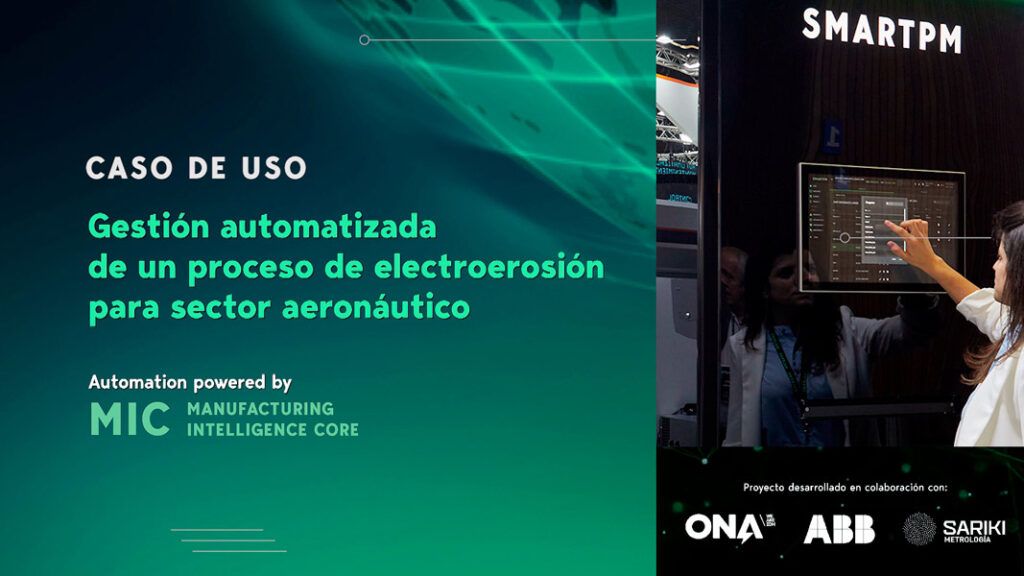
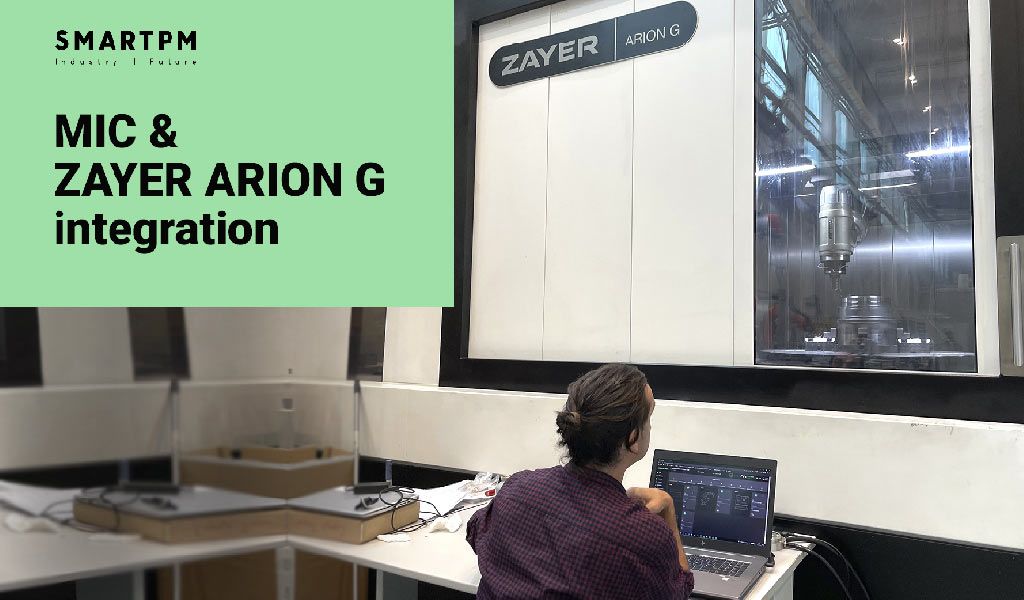
Sometimes it is necessary to go further in order to understand the impact of MIC
We offer you the possibility to see and touch the MIC solution in a personalized demonstration.